Is AI’s Multi-Trillion Dollar Bet a Genius Move or a Dot-Com Deja Vu?
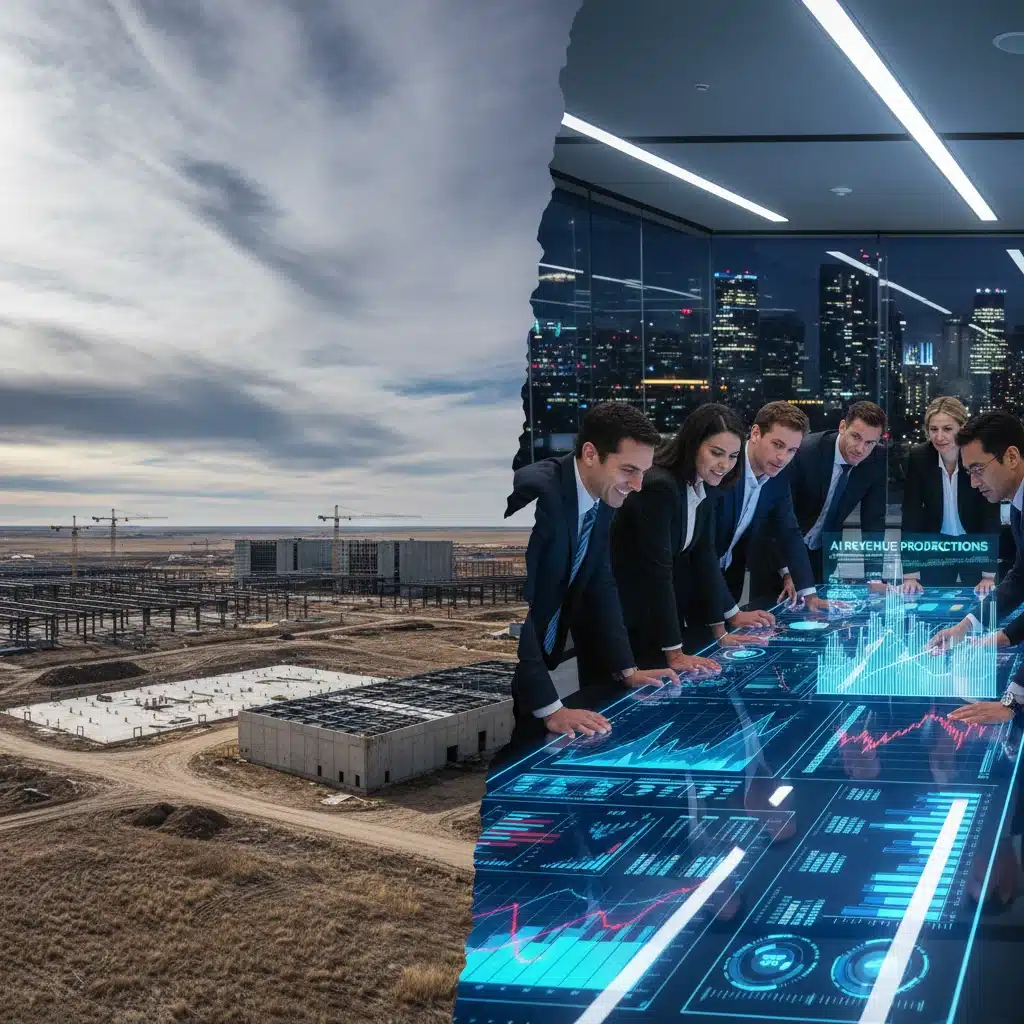
Chad here, and today we’re tackling a question that’s got more zeroes than my last attempt at a budget spreadsheet: Is AI’s Multi-Trillion Dollar Bet a Genius Move or a Dot-Com Deja Vu?
Seriously, the sheer scale of investment flooding into artificial intelligence right now is mind-boggling. We’re talking about figures that make the space race look like a weekend hobby project. But here’s the kicker, the trillion-dollar question that’s keeping a lot of smart people up at night: Will it ever actually pay off?
I’ve been digging deep into the data, sifting through the hype, and let me tell you, what I’ve found is a fascinating mix of unprecedented ambition, undeniable potential, and some incredibly loud echoes from bubbles past. So, buckle up, because we’re about to explore whether Silicon Valley’s biggest gamble is a visionary leap into the future or a fast track to a very expensive lesson in history.
The AI Gold Rush: Building an Empire, Byte by Byte
Let’s not mince words: the AI boom is fueling one of the most astonishing infrastructure build-outs in human history. Forget about a handful of startups coding in garages; we’re talking about an industrial revolution happening at warp speed.
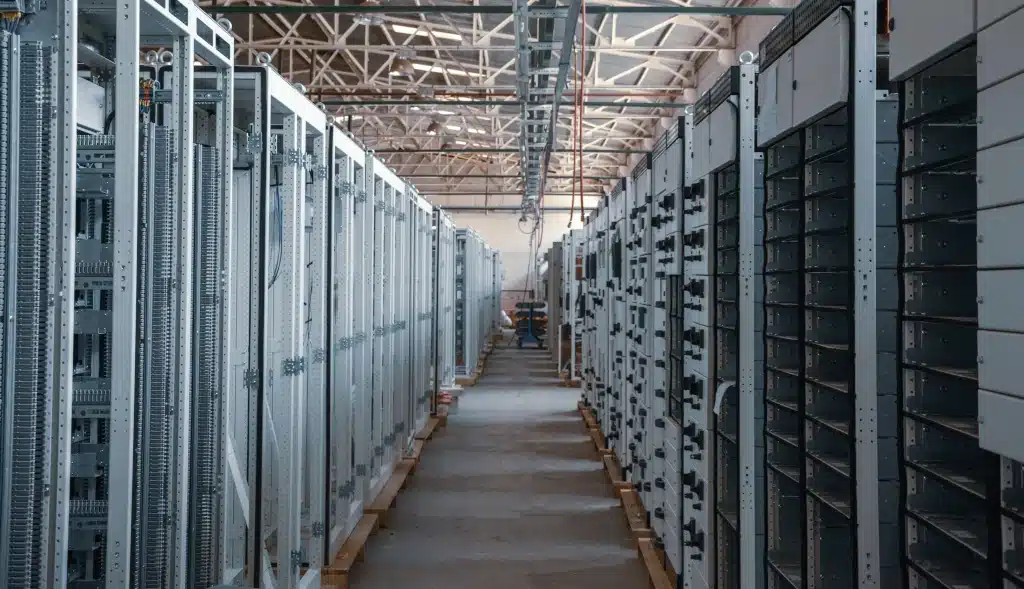
Take Ellendale, North Dakota. Population 1,100, two motels, a Dollar General, and a Pentecostal Bible college. And, oh yeah, a half-built AI factory larger than ten Home Depots, carrying a price tag exceeding $15 billion. That’s a quarter of North Dakota’s annual economic output. This isn’t just a big project; it’s a colossal, state-shifting endeavor in the middle of nowhere.
Over the past three years, the leading tech firms have collectively poured more capital into AI data centers, specialized chips, and energy infrastructure than it cost to build the entire interstate highway system over four decades, even adjusted for inflation. Microsoft CEO Satya Nadella and Meta CEO Mark Zuckerberg openly muse about the timeline, with Zuckerberg quipping, “Yeah, well, we’re all investing as if it’s not going to take 50 years” for AI adoption to mirror electricity. His own company’s U.S. spending through 2028? Probably around $600 billion.
We’re not just talking about upgrading servers here. OpenAI’s Sam Altman is reportedly planning a data center initiative called “Stargate,” a reference to an interstellar time-travel portal (because why not, right?). This little project could require at least $1 trillion in data-center investment. And get this: OpenAI recently committed to paying Oracle an average of $60 billion a year for servers. Meanwhile, OpenAI’s projected revenue from all its paying customers this year is “just” $13 billion.
Does that math make your head spin a little? Mine too.
The entire tech sector—from Alphabet and Amazon to Meta and Nvidia—is in a frantic race to outspend each other, betting hundreds of billions on the idea that AI will not only transform the global economy but also start spitting out profits at an equally mind-blowing pace. It’s a mega-speculative bet, pure and simple.
Annual AI Infrastructure Spending Estimates
Note: Figures are approximate annual or annualized estimates based on available data. Due to significant scale differences (e.g., $400B vs $1.2B), bars for values under $10B are visually represented with a minimum height for visibility, thus not perfectly proportional to the largest bar.
AI Investment & Revenue Snapshot (2023-2030 Projections)
| Category | Amount (approximate) | Timeframe/Context | Source/Entity | Notes |
| Total AI Infrastructure Spending | Hundreds of Billions (USD) | Past 3 years | Leading Tech Firms | Data centers, chips, energy. Exceeds cost of US interstate highway system (inflation-adjusted). |
| Meta’s U.S. Spending | ~$600 Billion | Through 2028 | Mark Zuckerberg (Meta) | Company’s total capital investment in the U.S. |
| OpenAI’s “Stargate” Effort | ~$1 Trillion | Required investment for data centers | Sam Altman (OpenAI) | Ambitious long-term vision. |
| OpenAI’s Oracle Server Payments | ~$60 Billion/year | Coming years | Sam Altman (OpenAI) to Oracle | For server access in data centers. |
| Hyperscalers’ Capex | ~$400 Billion | Next year (projected) | Alphabet, Microsoft, Amazon, Meta, others | Capital investments by major cloud providers. Exceeds cost of Apollo space program (today’s dollars). |
| CoreWeave’s Data Center Leases | ~$56 Billion | Over ~10 years | CoreWeave (Liabilities) | Payments for data center leases. |
| CoreWeave’s Debt | ~$15 Billion | Current | CoreWeave | Fueling rapid expansion and chip purchases. Interest rates >8%. |
| Ellendale, ND AI Facility | ~$15 Billion | Project cost | CoreWeave (leasing from Applied Digital) | Single data center project; ~1/4 of North Dakota’s annual economic output. |
| CoreWeave Contracts (Revenue for them) | ~$42 Billion | Coming years | CoreWeave (with tech companies) | Value of contracts with companies renting its servers (e.g., OpenAI expansion deal). |
| Applied Digital’s Lease to CoreWeave | ~$11 Billion | Over 15 years | Applied Digital (Landlord) to CoreWeave | Payment for Ellendale and other data centers. |
| AI Product Revenue (Current) | ~$45 Billion | Last year | Morgan Stanley (Estimate) | Primarily from chatbot subscriptions and data center usage fees. |
| OpenAI’s Projected Revenue | ~$13 Billion | This year (projected) | OpenAI | From all paying customers. |
| Revenue Needed to Justify Investment | ~$800 Billion | Over the life of 2023-2024 chips/data centers (3-5 years) | David Cahn (Sequoia Estimate) | Required for a “good investment return” on infrastructure built in 2023-2024. |
| Annual AI Revenue Needed | ~$2 Trillion/year | By 2030 | Bain & Co. (Estimate) | Required to justify the current wave of AI infrastructure spending. More than Amazon, Apple, Alphabet, Microsoft, Meta, Nvidia combined 2024 revenue. |
Echoes of the Dot-Com Bubble: A Frightening Parallel?
Now, if you’re a veteran of the tech world, or even just old enough to remember the late 90s, this all might feel a little… familiar. Because while the numbers today are far larger, the narrative has some uncomfortably loud echoes of the dot-com bubble.
Back then, telecom companies were convinced the internet’s growth would be so explosive that any investment in infrastructure was justified. They spent over $100 billion blanketing the country with fiber optic cables, believing the demand would never stop. The result? Massive overbuilding. When the bubble burst, telecom was hit hardest, with industry giants like Global Crossing and WorldCom toppling like dominos. Much of that fiber sat unused for over a decade.
Are we making the same mistake, just with more sophisticated hardware and sci-fi names?
Andrew Odlyzko, an emeritus professor from the University of Minnesota who studies these things, calls the unbridled optimism during these manias “collective hallucinations.” He saw it firsthand as a researcher at Bell Labs in the 90s. Everyone from investors to the press followed the herd, ignoring cautionary signs. Traffic wasn’t doubling every 100 days; it was doubling annually. The desire for financial gain overshadowed critical assessment.
Kevin O’Hara, a co-founder of Level 3, a fiber builder from that era, recounted how banks and investors were “throwing money” at them. They were spending $110 million a week building their network. Then reality hit, Level 3’s stock plummeted 95%, and sector giants went bust. It was an “absolute gold rush” that ended in a devastating bust.
The CoreWeave Story: From Crypto Miner to AI Colossus (on borrowed time?)
To understand the current AI infrastructure frenzy, you need to look at companies like CoreWeave. Six years ago, they were an obscure cryptocurrency miner with fewer than two dozen employees. Today? A computing goliath with a market value larger than General Motors or Target, flooded with money from Wall Street and private equity.
CoreWeave’s business model is simple, yet incredibly capital-intensive: lease data centers, fill them with Nvidia chips, and then rent those servers out to tech companies like OpenAI. They’ve gone from mining Ether to building the digital picks and shovels of the AI gold rush. Their founder, Michael Intrator, a former commodities trader, embodies the hard-driving culture, inspiring his troops with internet slang like “YOLO” and “GSD.”
And their growth? Blistering. They’ve racked up over $42 billion worth of contracts with tech companies in coming years, including a $6.5 billion expansion of their deal with OpenAI.
But here’s where it gets interesting – and a little precarious. This growth is heavily fueled by debt. Intrator himself calls it “the fuel for this company.” CoreWeave has around $15 billion in debt, with interest rates starting above 8% for their deals with top tech companies. On top of that, they’re on the hook for a staggering $56 billion in data center lease payments, typically over 10 years.
The catch? CoreWeave’s deals with tech companies are usually for two to five years. See the mismatch? They’re committing to long-term liabilities while their revenue streams are often shorter-term. What happens if demand softens, or if tech companies decide to build out more of their own infrastructure, pivoting away from third-party providers? Intrator insists their debt is tied to these contracts, providing more than enough to cover loans and leases, and that the high financing costs are “the tuition you pay when you build something new.” He acknowledges the risk but believes they’ve mitigated it thoughtfully.
However, the image of those dormant fiber optic cables from the dot-com era looms large. If the wave of building proves to be far more than needed, CoreWeave’s state-of-the-art data centers could suffer a similar fate.
The Trillion-Dollar Question: Will the Revenue Ever Catch Up?
This is the Gordian knot of the current AI boom. We’re spending money like there’s no tomorrow, but where’s the return?
- David Cahn, a partner at venture-capital firm Sequoia, estimates that the money invested in AI infrastructure in just 2023 and 2024 requires consumers and companies to buy roughly $800 billion in AI products over the life of these chips and data centers to produce a good investment return. And remember, AI processors have a useful life of only three to five years. That’s a lot of product to sell in a short window.
- Consultants at Bain & Co. went even further, estimating that the current wave of AI infrastructure spending will require $2 trillion in annual AI revenue by 2030. For context, that’s more than the combined 2024 revenue of Amazon, Apple, Alphabet, Microsoft, Meta, and Nvidia. And over five times the size of the entire global subscription software market.
To put it mildly, that’s an ambitious growth trajectory.
Morgan Stanley estimates that last year, there was around $45 billion in revenue for AI products. Yes, it’s growing fast, but the gap between current revenue and required revenue is, as Bernstein analyst Mark Moerdler puts it, “the trillion-dollar question.”
Consumers are quick to adopt AI, but mostly the free versions. Businesses, while intrigued, have been slow to fork out big money beyond basic subscriptions like Microsoft’s Copilot ($30 a month per user). Someone’s got to make money off this, right? Otherwise, we’re building a very expensive digital ghost town.
“This Time It’s Different” – Or Is It Just a Louder Version of the Same Song?
AI boosters are quick to insist that “this time it’s different.” And they do have some compelling arguments:
- Cash-Rich Giants: Unlike the fledgling telecom companies of the 90s, today’s tech giants are sitting on mountains of cash. They have deeper pockets to weather potential storms.
- Immediate Availability: The internet required consumers and businesses to get wired for high-speed access. AI, particularly generative AI, is immediately accessible to much of the planet via a web browser. OpenAI boasts roughly 700 million weekly ChatGPT users (9% of the world’s population) as of August, with revenue on track to triple over 2024. That’s rapid adoption.
- Job Displacement and Economic Gains: The most significant argument is that if AI advances to the point where it can replace a large swath of white-collar jobs, the savings will be more than enough to pay back the investment. AI executives predict the technology could add 10% to global GDP in the coming years. Oracle chairman Larry Ellison confidently stated, “Training AI models is a gigantic multi-trillion dollar market… The market for companies and consumers using AI daily will be much, much larger.”
However, “this time it’s different” is also the unofficial motto of every bubble in history. And there are some seriously worrying signs that the optimism won’t pan out as smoothly as projected:
- Lack of ROI: An MIT report found a staggering 95% of organizations surveyed are getting no return on their AI product investments. A University of Chicago economics paper found AI chatbots had “no significant impact on workers’ earnings, recorded hours, or wages” at 7,000 Danish workplaces. Are we building incredible tech that simply isn’t translating to bottom-line value yet?
- Diminishing Returns on Model Development: OpenAI’s release of ChatGPT-5 in August was widely viewed as an incremental improvement, not the game-changer many expected. This fanned concerns that generative AI models are improving at a slower pace than anticipated, especially considering each new model (like ChatGPT-4, ChatGPT-5) costs significantly more to train and release—often three to five times the cost of its predecessor. The payback has to be exponentially higher to justify that escalating expenditure.
- Rapid Chip Depreciation: Unlike the relatively stable fiber optic cables of the dot-com era, the latest AI chips rapidly depreciate in value as technology improves. What’s cutting-edge today could be functionally obsolete in three to five years, much like an older model car. This means the investment window for recouping costs is incredibly tight.
Roger McNamee, co-founder of tech investor Silver Lake Partners and a vocal critic of some tech giants, puts it bluntly: “This is bigger than all the other tech bubbles put together. This industry can be as successful as the most successful tech products ever introduced and still not justify the current levels of investment.”
That’s a sobering thought.
The Local Impact: Ellendale’s Big Gamble
While the titans of Silicon Valley duke it out, the ripple effects of this speculative frenzy are felt right down to places like Ellendale, North Dakota. The population effectively doubles during the day with construction workers. There’s a growing housing shortage, and the town is taking out loans for sewers, sidewalks, and new housing developments.
Mayor Don Flaherty articulates the raw, human stakes: “We’re stepping out and taking a chance here, and there’s a fear that everything could come crashing down” if the AI boom falters. But then he adds the other side of the coin: “But without the boom, there’s a chance that in 20 or 30 years, Ellendale could be a ghost town.”
This isn’t just about abstract billions and market caps; it’s about real jobs, real homes, and the very future of small towns clinging to the promise of progress. They’re “on the wave right now,” as Flaherty says, and they just have to keep riding it.
My Take: Navigating the AI Hype Cycle
So, where do we land on this colossal question? Are we building a monument to human ingenuity or a testament to speculative excess?
My take is that it’s probably a bit of both. The transformative potential of AI is undeniable. It will change how we work, live, and interact with the world. But the path to that future is rarely a straight line, and it’s almost always littered with the wreckage of over-enthusiastic investments.
The sheer scale of capital being deployed is unprecedented, and the revenue needed to justify it is staggering. This isn’t just a boom; it’s a financial supernova. While today’s tech giants are more resilient than their dot-com predecessors, and AI’s immediate utility is clear, the worrying signs are too numerous to ignore. The rapid depreciation of chips, the escalating costs of model training, and the struggle for businesses to demonstrate clear ROI are all red flags.
For businesses looking to jump on the AI bandwagon, my advice is cautious optimism: Experiment, but with purpose. Don’t chase the hype; chase the value. What specific problems can AI solve for your business? Where can it create measurable efficiencies or new revenue streams? A measured approach, focusing on tangible returns, will be far more sustainable than a “YOLO” mentality driven by FOMO.
For individuals, understanding this dynamic is crucial. AI will undoubtedly create new opportunities and displace others. Staying informed and adaptable will be key. Ultimately, the AI revolution is a reckoning. A reckoning for financial models, for corporate strategy, and for our collective ability to distinguish genuine innovation from unsustainable speculation. Are we on the cusp of a new Industrial Revolution, or just another “oops” moment for Silicon Valley? Only time, and a whole lot of revenue, will tell. But the stakes have never been higher.