

Meta Just Bet $1.2 Billion on Scale AI (And What That Means for the Rest of Us)
Chad here. Another day, another billion-dollar AI deal. At this point, watching tech giants throw money around feels like watching Monopoly games played with real currency. But Meta’s recent $1.2 billion investment in Scale AI—plus their decision to poach Scale’s co-founder—actually tells us something important about where AI is heading.
And spoiler alert: it’s not just about the big players anymore.
What Actually Happened Here
Meta didn’t just write a check. They made what I’d call a “we’re all-in” move. The company led Scale AI’s Series F funding round, bringing Scale’s valuation to a cool $13.8 billion. Then, because apparently that wasn’t enough of a statement, they hired Scale’s co-founder and former CTO, Alexander Wang, to head up their AI infrastructure efforts.
Scale AI, for those who haven’t been following the AI data game, is basically the company that makes AI models smarter by feeding them better data. They’re the ones training AI systems to recognize images, understand text, and make decisions that don’t completely embarrass their creators.
Think of them as the personal trainers of the AI world—except instead of getting you to do more burpees, they’re teaching AI systems to understand the difference between a stop sign and a pizza slice. (Surprisingly harder than it sounds.)
Why Meta Is Going All-In on Data
Here’s the thing about AI that nobody really talks about: the models are only as good as the data they’re trained on. You can have the fanciest algorithms in the world, but if you’re feeding them garbage data, you’re going to get garbage results.
Meta learned this the hard way. Their AI initiatives have been… let’s call them “mixed” in their success. Remember when their AI chatbot went completely off the rails within hours of launch? Yeah, that’s what happens when you don’t invest in proper data infrastructure.
Scale AI has been quietly building the infrastructure that companies like OpenAI, Google, and others rely on to train their models. They’ve got the systems, the processes, and the expertise to handle the massive amounts of data needed to make AI actually useful.
By investing in Scale and hiring Wang, Meta isn’t just buying technology—they’re buying credibility in the AI space. They’re saying, “We’re serious about this, and we’re willing to pay for the best.”
What This Means for Small Business (The Part You Actually Care About)
Now, you might be thinking, “Chad, this is all very interesting, but I’m running a three-person marketing agency. How does this affect me?”
Fair question. Here’s the deal: when the big players start investing seriously in AI infrastructure, it eventually trickles down to tools that actually help small businesses.
Better AI training means more reliable AI tools. When companies like Meta invest in better data infrastructure, the AI models that power everything from customer service chatbots to content creation tools get smarter and more reliable. That means the AI tools you’re using (or thinking about using) are going to get better, faster.
The democratization effect is real. As AI infrastructure improves, it becomes cheaper and easier for smaller companies to build AI-powered tools. We’re already seeing this with platforms like ChadGPT, where small businesses can access multiple high-quality AI models for less than the cost of a couple of fancy coffee drinks per month.
Competition drives innovation. When Meta makes moves like this, it forces other companies to step up their game. Google, Microsoft, OpenAI—they’re all watching and responding. That competitive pressure benefits everyone, especially small businesses who get access to better tools at lower prices.
The Talent War Is Real (And Expensive)
Let’s talk about the elephant in the room: Meta didn’t just invest in Scale AI, they literally hired away one of its co-founders. That’s not just business—that’s a statement.
The AI talent war is getting intense. Companies are throwing around compensation packages that would make professional athletes jealous. Wang’s move to Meta reportedly came with a package worth north of $100 million over four years.
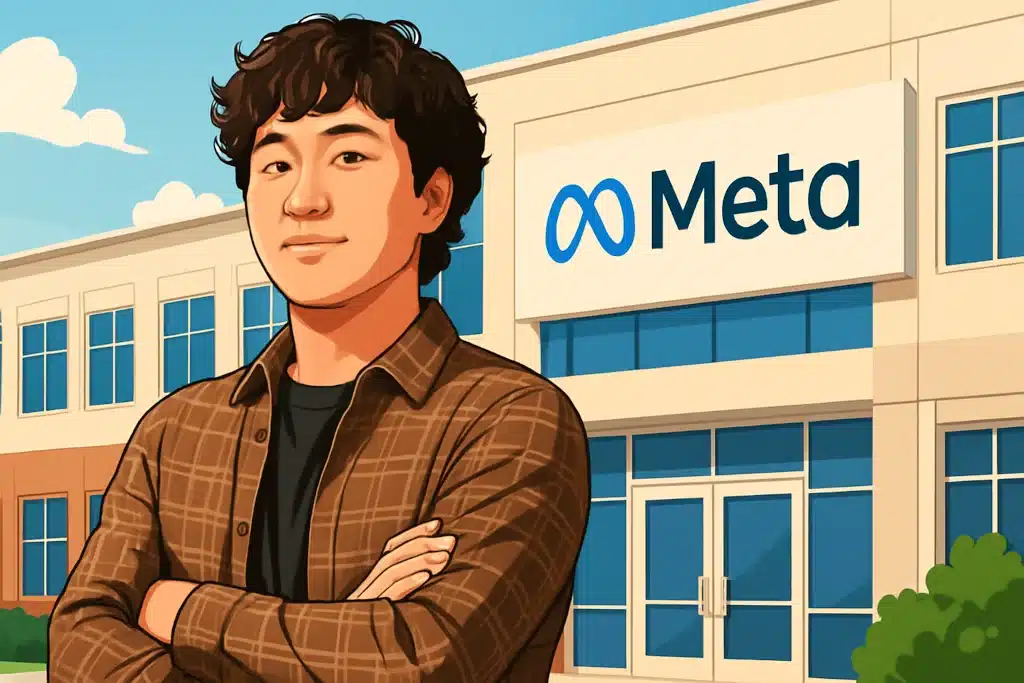
Image Created by ChadGPT AI Image Creator
For context, that’s more than some small countries’ GDP.
This talent consolidation has pros and cons for the rest of us. On one hand, having the best AI minds working at major tech companies means faster innovation and better consumer products. On the other hand, it means most of the AI talent is concentrated at a handful of companies, which could limit innovation elsewhere.
The Plot Thickens: OpenAI Says They’re Still Friends
Here’s where things get interesting (and a little awkward). Despite Meta essentially buying half of Scale AI, OpenAI’s CFO Sarah Friar announced at the VivaTech conference in Paris that they’re going to keep working with Scale AI like nothing happened.
Think about that for a second. Your biggest competitor just bought a major stake in one of your key suppliers, and you’re like, “Yeah, we’re cool with that.”
Friar’s reasoning actually makes sense, though. “We don’t want to ice the ecosystem because acquisitions are going to happen,” she said. “And if we ice each other out, I think we’re actually going to slow the pace of innovation.”
Translation: “Look, we all need each other to make this AI thing work, so let’s be adults about this.”
It’s a surprisingly mature take in an industry that’s usually more about dramatic CEO Twitter feuds than diplomatic cooperation. But here’s why this matters for small businesses: when the big players cooperate instead of building walls around their tech, everyone benefits.
Scale AI provides the training data that makes tools like ChatGPT actually useful. If OpenAI had decided to cut ties with Scale over Meta’s investment, it could have slowed down improvements to the AI tools we all use. Instead, they’re choosing collaboration over competition drama.
This is actually a good sign for the future of AI tools. When companies focus on building better products instead of corporate politics, small businesses get access to better, more reliable AI faster.
Plus, let’s be honest—watching tech executives act like reasonable adults for once is refreshing. Maybe there’s hope for this industry yet.
What Scale AI Actually Does (The Technical Stuff, Made Simple)
Since we’re talking about a $1.2 billion investment, you probably want to know what Scale AI actually does beyond “make AI better.”
They’re essentially the quality control department for AI training. When an AI company wants to teach their model to recognize images, understand text, or make decisions, they need massive amounts of high-quality, labeled data. Scale AI provides that service.
For example, if you want to train an AI to recognize different types of vehicles in traffic, you need thousands of images with each vehicle clearly labeled. Scale AI has the infrastructure and workforce to handle that kind of massive data labeling project.
They also work on what’s called “human feedback” training—basically getting humans to rate AI responses so the models can learn what good responses look like. It’s like having a really patient teacher who grades millions of homework assignments.
The Bigger Picture: AI Infrastructure Matters
Here’s what Meta’s bet really tells us: AI infrastructure is becoming as important as the AI models themselves. It’s not enough to have smart algorithms if you don’t have the systems to train them properly.
This is good news for small businesses because it means the AI tools we use are going to get more reliable and more useful. When the infrastructure improves, everything built on top of it improves too.
Think of it like roads. Better roads don’t just help the people who build them—they help everyone who drives on them. Better AI infrastructure helps everyone who uses AI tools, from Fortune 500 companies to solo consultants trying to automate their invoicing.
What’s Next?
Meta’s investment in Scale AI is just the beginning. We’re going to see more of these infrastructure investments as companies realize that winning in AI isn’t just about having the smartest engineers—it’s about having the best training data and the systems to use it effectively.
For small businesses, this means the AI tools available to us are going to keep getting better and more accessible. The gap between what big companies can do with AI and what small businesses can do is shrinking.
And honestly? That’s exactly what we need. Small businesses don’t have time for AI tools that work sometimes, or that require a PhD to operate. We need AI that just works, reliably, every time.
Meta’s $1.2 billion bet on Scale AI is a step toward that future. Now we just have to wait and see if they can deliver on it.
