

Meta’s New AI App Accidentally Turned Into a Public Confessional Booth
🤦🏻♂️ Privacy? Never heard of her.
When I opened the Meta AI app this week, I didn’t expect to hear a Southern man asking, “Hey Meta, why do some farts stink more than others?” through a public audio post.
Yet here we are.
If you thought your weird questions to an AI were private—bad news. Meta’s latest move somehow makes AOL’s infamous 2006 search data leak look like a cautious beta test. Welcome to the public confessional booth nobody meant to walk into.
Let’s break this mess down.

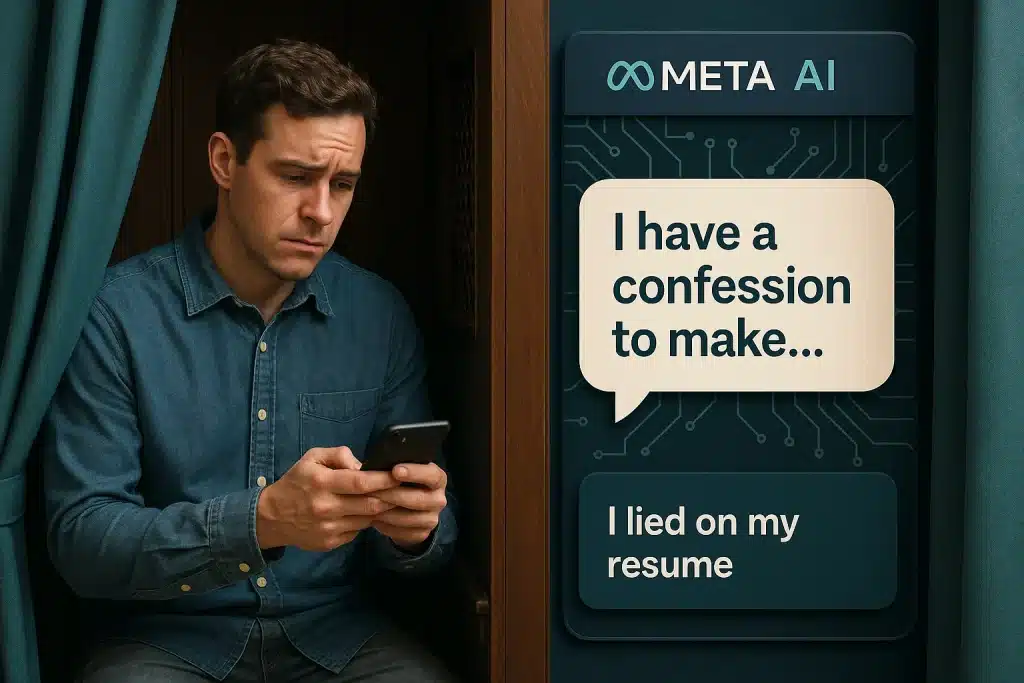
Image Created by ChadGPT AI Image Creator
So, What Exactly Happened?
Meta released a shiny new AI app. Like ChatGPT, but from the people who made Facebook—which should already make you nervous.
Inside this app is a little share button next to every chat you have with the AI. Tap it, and boom: you’re given a preview screen where you can “publish” that conversation. Innocent enough, right?
Except… people are using it without realizing their chats are being shared publicly. Not privately. Not with friends. Publicly, as in: the whole internet can now hear you asking how to hide assets from the IRS.
The Unfiltered Internet, Now With Full Names
I’ve seen it myself—everything from tax evasion advice and employee court letters (with names!) to full-on home addresses and weirdly personal legal drama. Security expert Rachel Tobac pointed out some horrifying examples of people unknowingly revealing sensitive info like they were texting their therapist, not a public forum.
To recap:
- Home addresses? Posted.
- Court cases? Shared.
- “How to meet big booty women”? Tragically public.
It’s like oversharing on Facebook never died—it just evolved into AI chat form.
Meta’s “Oops” Strategy
Here’s what Meta had to say when asked about the situation:
Absolutely nothing.
Not a peep.
TechCrunch reached out and got no on-the-record comment, which is Silicon Valley speak for “please stop noticing.”
Now, to be fair, the share button isn’t hidden. But the way it’s designed makes it super easy to accidentally blast your question about hemorrhoids or bong-making across the web. There’s no obvious warning that “sharing” means “publishing for strangers to see forever.”
Also, if you log into the app using Instagram—and your Instagram is public—guess what? Your Meta AI chats? Also public. Because that makes total sense. 🫠
So Who Thought This Was a Good Idea?
That’s the real question. Who at Meta thought, “You know what people really want? To share their chats with an AI in a social feed!” Was nobody around during the Google+ era?
It’s baffling. Google doesn’t try to turn Search into social media for a reason. And remember AOL’s attempt to release anonymized search data in 2006? Spoiler: people got doxxed. There’s history here, and Meta just ignored it.
Instead of building trust around their new AI tools, they dropped a public embarrassment engine that makes people go viral for all the wrong reasons.
The Trolls Have Entered the Chat
Of course, once people figured out they could post anything, they did what the internet does best: chaos.
- Someone posted their résumé and asked the AI for a cybersecurity job.
- Another user, under a Pepe the Frog avatar, asked how to make a water bottle bong.
- A third, my personal favorite, shared audio of a dramatic rant about their in-laws… complete with sound effects.
These aren’t bugs. These are features being used exactly as designed—just not the way Meta expected.
6.5 Million Downloads and a Whole Lot of Regret
Meta’s AI app has racked up about 6.5 million downloads since launch. That’s cute for an indie dev building a weather app. But this is Meta. The company with literal billions in AI investments. The bar is a bit higher.
If public humiliation was the growth strategy, they might be on to something. But if they wanted users to actually trust the platform? Yikes.
So, What Can You Learn From This?
- Read the screen before you hit “Share.” Assume nothing is private by default.
- Don’t test the limits of the First Amendment on a Meta platform.
- If your AI app design might accidentally leak people’s tax evasion plans… rethink the UX.
This whole saga is a crash course in what happens when a tech giant confuses “social engagement” with “involuntary public exposure.” And unlike that fart question, the stink here is very real.
TL;DR: Meta AI’s sharing feature is a privacy disaster wrapped in a UI fail.
And the only thing more dangerous than oversharing with an AI… is doing it with a Meta AI.
