

TikTok’s New “AI Slop” Filter: The Beginning of the End for Low-Effort Content?
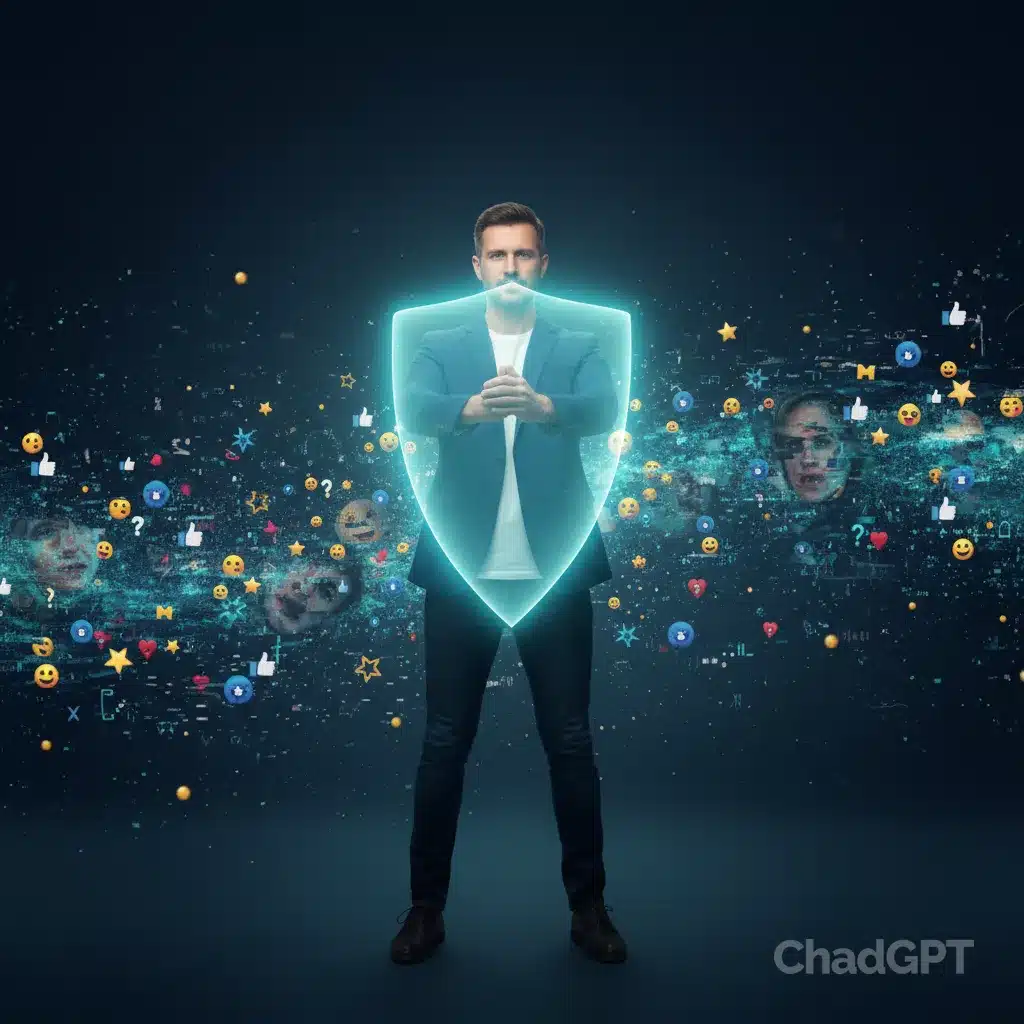
If you’ve scrolled through TikTok lately, you’ve seen it. The “Slop.”
A generic AI voice narration explaining “10 Facts About Ancient Rome That Will Scare You,” accompanied by bizarre, shifting images of gladiators with six fingers. Or perhaps it’s a “podcast clip” where Joe Rogan is interviewing a Minion, and it sounds terrifyingly real.
It’s called AI Slop, and frankly, it’s turning one of the world’s most addictive apps into a digital landfill.
TikTok knows it. Users hate it. And now, the platform is finally handing you a shovel to dig yourself out. TikTok recently announced a new suite of features designed to help users filter out AI-generated content (AIGC).
As the guy running ChadGPT, I live and breathe AI. We use the best models on the planet—GPT-5, Gemini 2.5, Claude 4—to help small businesses get real work done. But there is a massive difference between using AI to organize your team or write a killer email, and using it to flood the internet with low-effort garbage.
Let’s dive into what TikTok is actually doing, why they are doing it, and why I’m skeptical about whether it will actually work.
TL;DR
- The News: TikTok is testing a “Manage Topics” feature allowing users to dial down the amount of AI-generated content (AIGC) in their feeds.
- The Tech: They are implementing “Invisible Watermarking” and partnering with C2PA to embed metadata that proves content is AI-generated.
- The Money: TikTok is launching a $2M fund to teach “AI Literacy,” presumably so we stop falling for deepfake scams.
- The Chad Take: This is a necessary move to save the user experience, but “invisible” watermarks are easily scrubbed. The war on “Slop” has begun, and authenticity is the only winning strategy for creators and businesses.
The “Dead Internet” Creeping into Your Feed
Have you heard of the Dead Internet Theory? It’s an internet conspiracy theory that suggests the vast majority of web traffic, posts, and content is actually bots talking to other bots, with no humans involved.
A year ago, that sounded crazy. Today, scroll through your “For You” page (FYP) for ten minutes, and tell me it doesn’t feel at least partially true.
TikTok is facing an existential crisis. Their algorithm is famous for being the best in the world at predicting what you want to watch. But AI generators have hacked that loop. Creators—or rather, content farmers—are using automated tools to churn out thousands of videos a day. They don’t care about quality; they care about volume. If one video in a thousand goes viral, they make money.
The result? User fatigue.
TikTok’s announcement is couched in polite PR language about “transparency” and “empowerment.” But let’s translate that into Chad-speak: “Our users are annoyed, and if we don’t let them hide this junk, they’re going to leave.”
The Features: A Mute Button for Robots?
Here is the meat of the update. TikTok is expanding its “Manage Topics” feature. Currently, you can use this to tell the algorithm you don’t want to see “Dance” or “Food & Drink” (though who filters out food? You monster).
Soon, you will be able to use a slider to control how much AIGC you see.
The Skeptic’s View
This sounds great on paper. But it relies on one massive assumption: That TikTok actually knows what is AI and what isn’t.
If I film a video of myself talking about ChadGPT features, but I use an AI tool to fix the lighting or remove background noise, is that AIGC? If I use an AI script but read it myself, is that AIGC?
If the filter is too aggressive, it kills legitimate creators who use AI as a tool (the way we encourage at ChadGPT). If the filter is too weak, the Slop gets through anyway.
Invisible Watermarks: The High-Tech Band-Aid
To make this filter work, TikTok is doubling down on labeling. They claim to have already labeled 1.3 billion videos to date. That is a staggering number, and it proves just how much of this stuff is out there.
They are introducing two layers of defense:
- C2PA Content Credentials: This is an industry standard (backed by Adobe, Microsoft, etc.) that embeds metadata into a file. It’s like a digital birth certificate saying, “I was made by DALL-E.”
- Invisible Watermarking: A proprietary tech that hides a signal in the video or audio that humans can’t see/hear, but TikTok’s detection models can read.
Why This Might Not Work
I want to be optimistic. I really do. But I know how software works.
C2PA metadata is fragile. Do you know how you remove it? You take a screenshot. Or you screen-record the video. Or you run the video through a cheap converter tool from 2015.
Once that file is “flattened,” the metadata is often gone. TikTok says their “invisible watermark” is robust and harder to remove. But in the arms race between billion-dollar platforms and teenagers trying to go viral with AI-generated memes, the teenagers usually find a workaround within 48 hours.
Furthermore, this punishes the “good actors.” If I use OpenAI’s image generator via ChadGPT to make a blog header, it comes with the metadata. I’m transparent. But the “Slop Shops” using open-source models on private servers? They aren’t adding those credentials. They are flying under the radar.
The “Slop” vs. The “Tool”
This brings us to a critical distinction that small business owners and solopreneurs need to understand.
There is AI Slop, and there is AI Utility.
AI Slop is lazy. It’s asking a model to “Write a funny video script,” pasting it into an AI avatar generator, and hitting publish without a single human thought intervening. It feels hollow because it is hollow.
AI Utility is what we do at ChadGPT. It’s using Gemini 2.5 Pro to analyze your spreadsheet data so you can make a better decision. It’s using Claude 4 to help you refine a difficult email to a client. It’s using AI to support your human intelligence, not replace it.
TikTok’s filter is trying to target the Slop, but the collateral damage might be the creators who use AI as a creative assistant.
The Business Angle: Why You Should Care
“Okay Chad,” you say, “I run a plumbing business or a SaaS startup. Why do I care about TikTok filters?”
Because this is the canary in the coal mine for SEO and Marketing.
If TikTok is building a “Filter out AI” button, you can bet your bottom dollar that Google is doing the same thing with search results (in fact, they already are with their “Helpful Content” updates). LinkedIn is likely looking at it too.
If your marketing strategy relies on mass-producing low-quality AI articles or videos, you are building on quicksand.
The New Premium: “100% Human Certified”
We are heading toward a weird future where “Human Made” becomes a luxury label, like “Organic” or “Non-GMO.”
If you are a small business owner:
- Don’t hide your AI use, but don’t rely on it entirely. If you use AI to write a blog post, edit it heavily. Inject your own stories, your own voice, your own sarcasm.
- Focus on Personality. AI is bad at being a specific person. It’s great at being the “average” of the internet. Be weird. Be specific. Be you.
- Use AI for the Boring Stuff. Use ChadGPT to handle your admin, your coding, your data analysis. Free up your brain space so you can be the creative force in your marketing.
The $2M Literacy Fund: Too Little, Too Late?
Part of TikTok’s announcement includes a $2M fund for “AI Literacy,” partnering with groups like GirlsWhoCode.
This is a nice gesture. $2M is also what TikTok likely makes in revenue in the time it took you to read this sentence.
Education is good, but we are fighting biology here. Our brains are wired to trust what we see and hear. When we see a video of a celebrity endorsing a crypto scam, and the lip-sync is perfect, a 10-minute “literacy course” might not save us.
The skepticism needs to go deeper. We need to treat all content as potentially synthetic until proven otherwise. That is a grim way to view the internet, but it’s the only safe way forward.
What Should You Do?
If you’re a consumer:
- Turn the filter on when it becomes available. Not because you hate AI, but because you need to train the algorithm that you want quality.
- Be skeptical. If a video provokes an immediate, intense emotional reaction (fear, anger), pause. Check the source. Is it AI?
If you’re a Creator or Business:
- Stop posting Slop. Seriously. It might get views today, but it destroys trust tomorrow.
- Use AI as a force multiplier. Use ChadGPT Team features to coordinate your actual human team. Use our reasoning models (like OpenAI o4-Mini) to research topics deeply so your content is actually insightful.
- Be the signal, not the noise. In a world of infinite AI noise, the most valuable asset is a human connection.
Final Thoughts: The Cat is Out of the Bag
TikTok’s attempt to filter out AI is like trying to filter pee out of a swimming pool. You can add chemicals, you can put up signs, but once it’s in there, it’s in there.
The “Invisible Watermark” will be cracked. The filters will be bypassed. The Slop will continue to flow.
But this announcement signals a shift. The platforms know that unrestricted AI content is a user retention killer.
At ChadGPT, our mission is simple: Make AI useful, simple, and helpful. We don’t want you to generate fake videos. We want you to finish your admin work in 10 minutes so you can go home to your family.
We believe the future of AI isn’t about fooling people—it’s about empowering them. And if TikTok can help clear away some of the fake dancing robots so you can see real content? I’m all for it.
Just don’t be surprised when the robots find a way back in.

One comment
Comments are closed.
Hey Chad,
Love the ChadGPT perspective! Its like TikToks trying to put a leash on AI-generated cat videos, while the real creators (like us) are just here to organize the whole damn spreadsheet. Were all for transparency, but lets be real, the real Slop is probably just someones grandma trying to make a meme with DALL-E. Filters are great, but the cats already out – those teenagers will find a workaround faster than you can say ChadGPT. Keep up the good fight, and dont forget to label your own cat videos as AIGC – its the only way to the top! 🐾🤖